Preparing to sell in Hampton Roads? Verify these seven property details before your home is listed, photographed, priced, and marketed to buyers. Preparing a Hampton Roads home for sale

Dated: September 21 2026
Views: 7
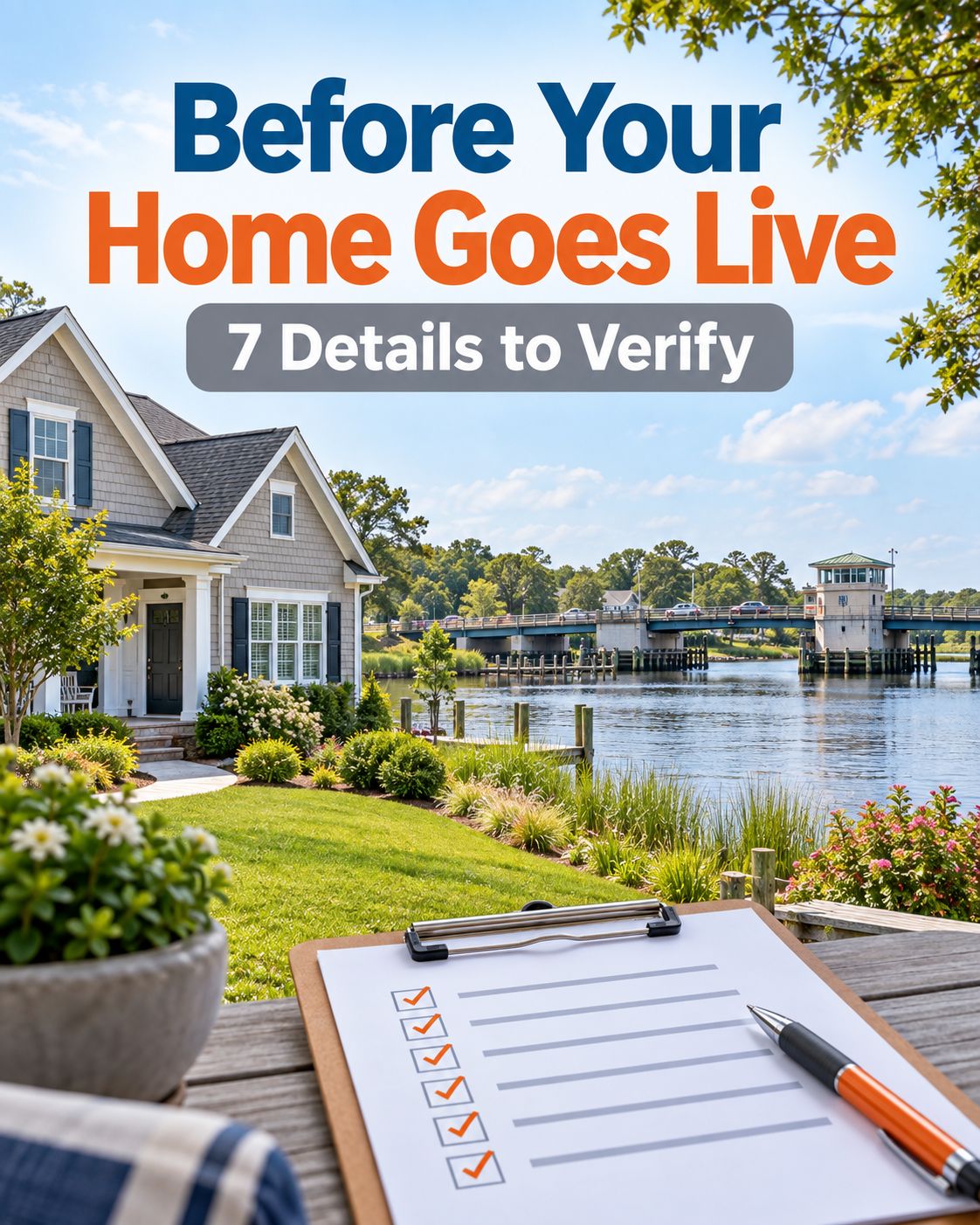
Preparing to sell in Hampton Roads? Verify these seven property details before your home is listed, photographed, priced, and marketed to buyers.
Preparing a Hampton Roads home for sale usually begins with visible work: cleaning, landscaping, repairs, photographs, and staging. Those steps matter, but the accuracy of the information used to market the property matters just as much.
Buyers can now compare listing details with public records, mapping tools, online estimates, previous listings, insurance information, and association documents within minutes. Some information may be incomplete or outdated. Other details may simply require explanation.
Before your property appears online, we recommend verifying these seven areas.
Start by comparing the current property record with the physical home. Review the recorded living area, lot size, number of bedrooms and bathrooms, construction type, and listed improvements.
Public records are useful, but they are not guaranteed to reflect every change immediately. A finished room, converted garage, addition, enclosed porch, detached structure, or remodeled area may be described differently across tax records, permits, appraisals, and previous listings.
A discrepancy does not automatically mean something is wrong. It does mean we should understand the difference before placing a specific figure in the listing.
Create a list of meaningful improvements and approximate completion dates. This might include the roof, HVAC equipment, windows, water heater, electrical panel, plumbing, flooring, kitchen, bathrooms, drainage work, crawlspace improvements, or exterior structures.
Gather available invoices, warranties, permits, contractor records, and transferable service agreements. If work required approval from a locality or association, confirm whether the supporting documentation is available.
This information helps us market improvements accurately and answer the follow-up questions buyers are likely to ask. It may also help an appraiser or inspector understand work that is not obvious during a short visit.
Walk through the property and identify known defects, unfinished projects, and items that may need repair. Discuss them early so they can be addressed or properly disclosed rather than becoming an unexpected issue during inspection.
We also need to identify what will remain with the property. Appliances, mounted televisions, smart-home equipment, refrigerators, garage storage, sheds, security devices, outdoor furniture, and decorative fixtures can create confusion when expectations are not documented.
A listing photograph may show an item without establishing whether it conveys. Clear written terms are more dependable than assumptions based on a picture.
Hampton Roads properties should be evaluated individually for flood exposure and drainage. A statement about an entire city or neighborhood cannot determine the circumstances of one address.
Review the applicable FEMA mapping and Virginia’s Flood Risk Information System. Gather any available elevation certificate, flood-insurance information, drainage documentation, or records of relevant improvements. Virginia cautions that flooding can occur outside mapped high- and moderate-risk areas. Virginia Flood Risk Information System.
Sellers should answer known-condition questions accurately without predicting a buyer’s insurance requirements or future premium. Buyers should obtain property-specific insurance guidance during their contract period.
If the property is governed by a homeowners or condominium association, verify the association’s correct name, current dues, payment schedule, management contact, and basic amenities.
Do not rely solely on an older listing. Dues, services, rules, assessments, and management companies can change.
Gather the required resale or disclosure package through the proper process. Buyers will need the current documents to evaluate restrictions, financial obligations, insurance arrangements, pending projects, and other association matters.
Confirm whether the home has public water and sewer, a private well, a septic system, natural gas, propane, or other property-specific systems. If solar equipment, leased equipment, or service contracts are involved, gather the agreements and current account information.
Historic utility bills can be helpful when presented with appropriate context, but they should not be treated as a guarantee of future costs. Usage depends on household size, temperature preferences, weather, equipment efficiency, and provider rates.
Accurate utility information is particularly important when buyers are comparing homes across Chesapeake, Virginia Beach, Norfolk, Suffolk, Portsmouth, Hampton, and Newport News, where services and billing structures can differ.
Search the complete address and review what buyers are likely to find. Look at older listing photographs, public property information, map placement, automated valuations, and any outdated descriptions.
An automated home-value estimate is not the same as a property-specific market analysis. An estimate may not fully account for condition, renovations, lot characteristics, flood considerations, association obligations, or the most relevant recent sales.
We cannot control every third-party website, but we can make the new listing as accurate and complete as possible. Strong photographs, carefully verified facts, transparent explanations, and relevant comparable sales give buyers better information than a generic online estimate alone.
A listing should do more than attract attention. It should give buyers reliable information and make it easier for them to decide whether the property fits their needs.
Verifying these details before photography and marketing reduces avoidable corrections, prepares us for buyer questions, and helps the home enter the market with a clearer story.
If you are preparing to sell in Chesapeake, Virginia Beach, Norfolk, Suffolk, Portsmouth, Hampton, or Newport News, we can help you organize the property information, evaluate the local market, and build a well-supported listing strategy.Contact Us Today:

Rick Rivas is a Hampton Roads real estate agent and retired U.S. Navy Surface Warfare Officer serving buyers, sellers, renters, and investors across Virginia Beach, Chesapeake, Norfolk, Suffolk, Ports....
Preparing to sell in Hampton Roads? Verify these seven property details before your home is listed, photographed, priced, and marketed to buyers. Preparing a Hampton Roads home for sale
Great Bridge, Chesapeake, VA · September 2026 Market UpdateBridgefield: Prices Are Up, But the Pace Has ChangedOnly two homes have sold in Bridgefield in the last six months. I pulled the
A home may look close to work on a map, but Hampton Roads commuters know that mileage tells only part of the story. Waterways, bridge-tunnels, toll facilities, construction,
 Copyright© 2026 REIN Inc. Information Deemed Reliable But Not Guaranteed. The listings data displayed on this medium comes in part from the Real Estate Information Network Inc.(REIN) and has been authorized by participating listing Broker Members of REIN for display. REIN's listings are based upon Data submitted by its Broker Members, and REIN therefore makes no representation or warranty regarding the accuracy of the Data. All users of REIN's listings database should confirm the accuracy of
the listing information directly with the listing agent. Copyright ©2026 REIN. REIN's listings Data and information is protected under federal copyright laws.Federal law prohibits, among other acts, the unauthorized copying or alteration of, or preparation of derivative works from, all or any part of copyrighted materials, including certain compilations of Data and information. COPYRIGHT VIOLATORS MAY BE SUBJECT TO SEVERE FINES AND PENALTIES
UNDER FEDERAL LAW.
REIN updates its listings on a daily basis. Data last updated: September 21, 2026 9:51 PM UTC
Show More...
Copyright© 2026 REIN Inc. Information Deemed Reliable But Not Guaranteed. The listings data displayed on this medium comes in part from the Real Estate Information Network Inc.(REIN) and has been authorized by participating listing Broker Members of REIN for display. REIN's listings are based upon Data submitted by its Broker Members, and REIN therefore makes no representation or warranty regarding the accuracy of the Data. All users of REIN's listings database should confirm the accuracy of
the listing information directly with the listing agent. Copyright ©2026 REIN. REIN's listings Data and information is protected under federal copyright laws.Federal law prohibits, among other acts, the unauthorized copying or alteration of, or preparation of derivative works from, all or any part of copyrighted materials, including certain compilations of Data and information. COPYRIGHT VIOLATORS MAY BE SUBJECT TO SEVERE FINES AND PENALTIES
UNDER FEDERAL LAW.
REIN updates its listings on a daily basis. Data last updated: September 21, 2026 9:51 PM UTC
Show More...
 The data relating to real estate for sale on this website comes in part from the (IDX)Internet Data Exchange Program of the Albemarle Area Association of Realtors, Multiple Listing Service. Real estate listings held by brokerage firms other than the Realtor owner of this website are marked with the Internet Data Exchange logo (IDX) or the Internet Data Exchange brief/thumbnail logo and detailed information about them includes the name of the listing firm.
Information on this website is provided
exclusively for consumers personal, non-commercial use and may not be used for any purpose other than to identify prospective properties consumers may be interested in purchasing
Show More...
The data relating to real estate for sale on this website comes in part from the (IDX)Internet Data Exchange Program of the Albemarle Area Association of Realtors, Multiple Listing Service. Real estate listings held by brokerage firms other than the Realtor owner of this website are marked with the Internet Data Exchange logo (IDX) or the Internet Data Exchange brief/thumbnail logo and detailed information about them includes the name of the listing firm.
Information on this website is provided
exclusively for consumers personal, non-commercial use and may not be used for any purpose other than to identify prospective properties consumers may be interested in purchasing
Show More...
